
Multi-Scale Road Traffic Control with Connected and Automated Vehicles

Prof. Antonella Ferrara, University of Pavia, Italy
Antonella Ferrara received the M.Sc. degree (Cum Laude and printing honors) in electronic engineering and the Ph.D. degree in computer science and electronics from the University of Genova, Italy, in 1987 and 1992, respectively. Since 2005, she has been Full Professor of automatic control at the University of Pavia, Italy, where she is the Head of the Intelligent Robotics Laboratory, as well as the President of the Research Standing Committee of the Department of Electrical, Computer and Biomedical Engineering. Her research activities are mainly in the area of nonlinear control, with a special emphasis on sliding mode control and application to road traffic, automotive systems, robotics and power systems. Among several awards, she was a co-recipient of the 2020 IEEE Transactions on Control Systems Technology Outstanding Paper Award. She is IEEE Fellow and IFAC Fellow.*
Abstract:
The impact of successful research in road traffic control spans across various domains, including the scientific, technological, social, and economic spheres. Its significance is profound, as it directly influences safety, quality of life, climate neutrality, energy resource utilization, and transportation costs. However, the development of effective methods and algorithms for road traffic management encounters notable methodological challenges. Traditionally, traffic control strategies have relied on infrastructure-based approaches. Yet, the rapid advancements in automotive technologies, traffic sensors, data processing, and communication have created unprecedented opportunities for the exploitation of an advanced type of vehicles, called connected and automated vehicles (CAVs), offering innovative solutions to longstanding traffic control challenges. This talk will address these challenges and advancements, beginning with an overview of classical traffic control concepts. It will then focus on emerging research trends that exploit the multi-scale nature of traffic systems, from the microscopic scale of the individual CAV to the macroscopic scale of the traffic flow. Furthermore, it will illustrate how these aspects can efficiently coexist within an advanced vehicular traffic control system that optimizes the traffic throughput and mitigates the environmental impact.
Uncertainty and Control: From EKF-Based Planning to Variational Dynamic Programming
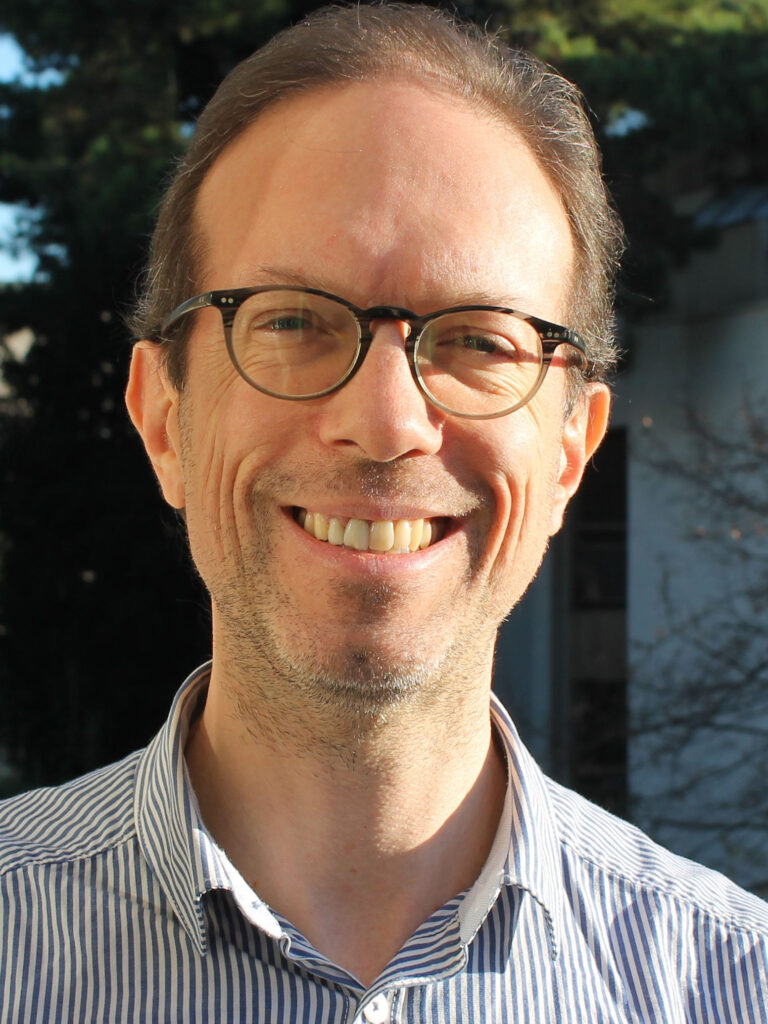
Prof. Silvère Bonnabel, Mines Paris PSL, France
Silvère Bonnabel is a Professor at Mines Paris PSL, Paris Sciences et Lettres Research University. His research lies in the intersection of control theory, robotics, and learning. He received his doctoral degree in Mathematics and Control from Mines Paris in 2007. He was an Invited Fellow at the University of Cambridge in 2017, and at INRIA Paris in 2022. Prof. Bonnabel was awarded the IEEE – SEE Glavieux prize in 2015, the Automatica Paper Prize in 2020, the European Control Award in 2021, and the Prix IMT Espoir from the French Academy of Sciences in 2022. He currently serves as an Associate Editor for the IEEE Control Systems journal.
Abstract:
This lecture explores some interplay between control and estimation. When planning short-term trajectories for systems with imperfect, noisy sensors, it can be beneficial to explicitly predict the state uncertainty along the path using an Extended Kalman Filter (EKF). Incorporating this uncertainty into trajectory planning, akin to dual or perception-aware control, leads to hybrid objectives that combine a nominal control cost with an EKF-based uncertainty penalty. We present new formulas for efficiently computing the gradients of the EKF outputs with respect to control inputs in nonlinear contexts, enabling direct first-order optimization of such hybrid objectives. Applications include sensor selection and scheduling under limited sensing, quadrotor tracking and collision avoidance, and informative trajectory design for ground robot navigation, or for information gathering about the environment. The second part of the talk revisits stochastic optimal control, where feedback policies may be probabilistic and an entropy penalty promotes exploration, an idea currently popular in reinforcement learning (e.g., “soft-actor critic”). By reformulating the cost as a Kullback–Leibler (KL) divergence between joint distributions, we draw on tools from variational inference and probabilistic modeling to derive a dynamic programming principle in which the value function itself is approximated through a KL divergence. Finally, we connect this framework back to estimation and sensor imperfections, and show that, in the linear case, the usual separation principle from control theory carries over to the setting of probabilistic control with maximum entropy.
Control of Autonomous Systems in the Era of Artificial Intelligence

Prof. Paweł Skruch, AGH University of Kraków, Poland
Paweł Skruch is a Professor at the AGH University of Kraków. He graduated in 2001 in Automation and Robotics, obtained his PhD in 2006, and completed his habilitation in 2016. Since 2025, he has held the title of Full Professor in the Department of Automatic Control and Robotics at AGH, where he leads the Dynamic Systems and Control Theory Group. His expertise lies at the intersection of control theory, artificial intelligence, and autonomous systems, with applications in autonomous vehicles, robotics, and advanced driver assistance systems. He has participated in numerous interdisciplinary projects combining engineering, computer science, and applied mathematics, focusing on the design of safe and reliable solutions for modern mobility and intelligent systems. He has led several research projects funded by the European Union and the National Centre for Research and Development in Poland, as well as industry projects in automated driving, whose results have been successfully implemented by global automotive corporations. He actively collaborates with research institutions in Europe, Asia, and the United States.
Abstract:
Artificial intelligence is transforming the design and operation of autonomous systems, including automated vehicles, mobile robots, and humanoid robots. It has significantly enhanced perception and decision-making capabilities, which are fundamental components of modern autonomous system architectures. At the same time, the increasing integration of AI introduces new challenges for the control layer, where safety, reliability, robustness, explainability, and trustworthiness remain critical requirements. This plenary lecture will discuss how modern control theory is evolving to address the demands of AI-enabled autonomy. The lecture will also examine key challenges related to verification, validation, explainability, and compliance with emerging regulatory frameworks governing safety-critical AI systems. Drawing on recent research developments and practical examples from autonomous vehicles and robotics, the talk will highlight the evolving role of control engineering in the era of artificial intelligence and discuss the opportunities and challenges that lie ahead for the next generation of autonomous systems.
*) Biography and photo based on the webpage UNIPV Identification and Control of Dynamic Systems Laboratory